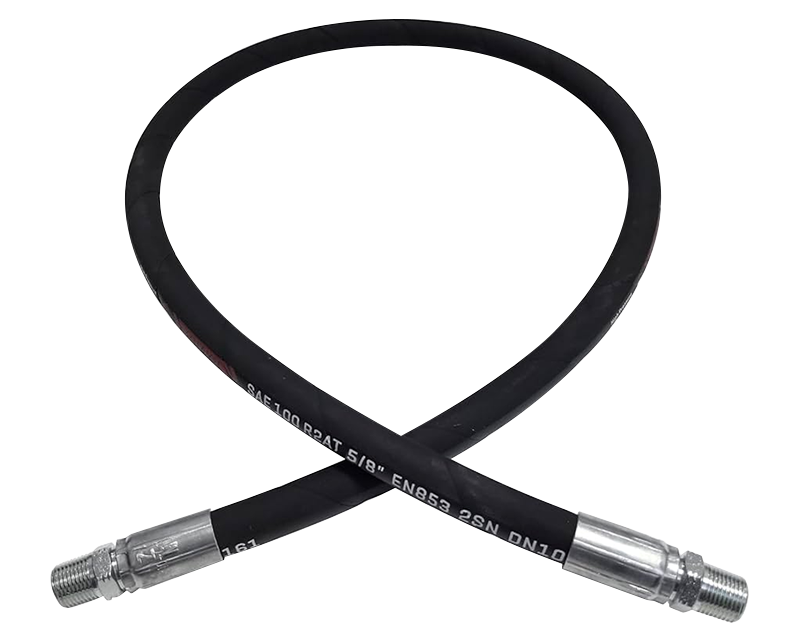
Hydraulic hoses are available in several types, including wire braid hoses, spiral wire hoses, textile reinforced hoses, thermoplastic hoses, and specialty hoses. Each type is designed for different pressure levels, temperatures, and working conditions. For example, SAE 100R1 hoses are commonly used for medium-pressure systems, while SAE 100R13 spiral hoses can handle heavy-duty applications above 5,000 psi. Selecting the correct hydraulic hose helps reduce leakage risks, improve equipment reliability, and maintain stable hydraulic performance.
Hydraulic hoses are flexible components used to transfer hydraulic fluid between system parts such as pumps, cylinders, valves, and motors. Unlike standard rubber tubes, hydraulic hoses are built with multiple layers to handle high pressure, vibration, movement, and temperature changes.
A typical hydraulic hose contains three basic layers:
| Layer | Main function |
|---|---|
| Inner tube | Carries hydraulic oil and provides fluid compatibility |
| Reinforcement | Controls pressure resistance and hose expansion |
| Outer cover | Protects against abrasion, weather, and chemicals |
The construction of the reinforcement layer determines the hose’s pressure range. Many industrial hydraulic systems operate between 1,000 psi and 5,000 psi, while specialized systems may require hoses rated above 10,000 psi.
The most common type used in general hydraulic equipment is the wire braid hose. It uses braided steel wire around the inner tube to provide strength while keeping good flexibility.
Single-wire braid hoses are often classified under SAE 100R1 standards and are widely used in agricultural machinery, forklifts, and industrial equipment. Two-wire braid hoses, such as SAE 100R2 types, provide higher pressure capability and are suitable for applications where pressure changes occur frequently.
Typical features include:
-
Working pressure commonly ranging from 3,000 psi to 6,000 psi depending on size and design
-
Good flexibility for equipment with frequent movement
-
Suitable performance in temperatures around -40°F to 212°F for many standard models
Because wire braid hoses balance flexibility and strength, they represent a large share of hydraulic hose applications in mobile equipment.
For systems that require higher pressure resistance, spiral wire hoses are often selected. Instead of braided reinforcement, these hoses use multiple layers of steel wire arranged in spiral patterns.
Four-wire and six-wire spiral hoses are designed for heavy machinery such as excavators, mining vehicles, and high-pressure industrial equipment.
| Hose type | Reinforcement | Common pressure range |
|---|---|---|
| SAE 100R1 | One wire braid | Around 1,000–3,000 psi |
| SAE 100R2 | Two wire braid | Around 2,000–6,000 psi |
| SAE 100R12 | Four spiral wires | Around 4,000 psi and above |
| SAE 100R13 | Multi-layer spiral wire | High-pressure applications |
Spiral wire hoses usually have stronger pressure resistance than braided hoses, but they require more installation space because their bending radius is larger.
Textile reinforced hydraulic hoses use synthetic fibers instead of steel wire. These hoses are lighter and easier to handle, making them suitable for low-pressure applications.
They are commonly used for:
-
Air and fluid transfer systems
-
Lubrication equipment
-
Low-pressure return lines
-
Light industrial machinery
Many textile reinforced hoses operate below 1,500 psi, which makes them unsuitable for heavy hydraulic cylinders but practical for systems where flexibility and weight reduction are important.
The material used in reinforcement also affects hose performance. Synthetic fiber layers can provide good flexibility, while steel reinforcement offers stronger pressure resistance.
Thermoplastic hydraulic hoses use materials such as polyurethane, nylon, and polyester. Compared with traditional rubber hoses, thermoplastic designs usually have lower weight and stronger resistance to some chemicals.
These hoses are often used in:
| Industry | Application |
|---|---|
| Robotics | Compact hydraulic systems |
| Manufacturing | Automated equipment |
| Transportation | Hydraulic control systems |
| Maintenance equipment | Portable hydraulic tools |
Thermoplastic hoses can be produced with smaller outer diameters, allowing easier routing in limited installation areas. Some models are also designed for electrical non-conductivity, which is useful in certain maintenance and utility applications.
Temperature conditions also influence hose selection. Standard rubber hydraulic hoses usually work within a specific temperature range, while specialty hoses are designed for more demanding environments.
High-temperature hydraulic hoses are used in equipment where oil temperatures may exceed 250°F (121°C). These hoses are common in steel processing facilities, industrial plants, and heavy machinery exposed to heat.
Fire-resistant hydraulic hoses are used in industries where flame resistance is required. Mining equipment, offshore machinery, and aerospace systems often use hoses that meet specific safety standards.
Chemical compatibility is another important factor. Hydraulic fluids vary in composition, and a hose that works well with mineral oil may not perform properly with synthetic fluids or biodegradable oils.
When selecting a hydraulic hose, several technical specifications should be checked before installation.
| Specification | Reason |
|---|---|
| Working pressure | Matches system operating conditions |
| Burst pressure | Provides safety margin during pressure spikes |
| Inner diameter | Controls flow speed and pressure loss |
| Temperature range | Prevents material damage |
| Fluid type | Ensures material compatibility |
The inner diameter affects hydraulic efficiency. A hose that is too small can increase friction and heat generation, while a larger hose may increase installation size and cost.
Hose length also requires attention. A hydraulic hose that is too short may experience excessive tension during equipment movement, while excessive length can increase vibration and reduce system organization.
A hydraulic hose should be installed with enough flexibility to allow movement, but without unnecessary bends or twisting. Correct routing can extend service life and reduce maintenance frequency.
Hydraulic hoses are used across many industries because hydraulic power systems require reliable fluid transfer under pressure.
Common applications include:
-
Construction equipment such as excavators and loaders
-
Agricultural machines including tractors and harvesters
-
Industrial presses and manufacturing equipment
-
Mining machinery
-
Marine hydraulic systems
-
Aircraft hydraulic controls
Construction machinery often places high demands on hoses. Excavators may operate thousands of hydraulic cycles each day, with hoses exposed to vibration, dust, and repeated bending.
Regular inspection helps identify problems before hose failure occurs. Common inspection points include surface cracks, oil leakage, damaged covers, exposed reinforcement wires, and unusual deformation.
Maintenance practices include:
-
Checking hoses during routine equipment service
-
Replacing damaged fittings
-
Avoiding contact with sharp edges
-
Following manufacturer installation guidelines
-
Using correct hose assemblies
According to hydraulic equipment maintenance studies, improper installation contributes to a significant percentage of hose-related failures. Correct assembly methods and suitable hose selection improve operating reliability.
The service life of a hydraulic hose depends on operating pressure, temperature, environment, and maintenance quality. A hose working near its maximum rated pressure will usually experience more stress than one operating below its recommended range.
Storage conditions also affect hose quality. Many manufacturers recommend storing unused hoses in dry environments away from direct sunlight and extreme temperatures. Proper storage can help maintain rubber flexibility before installation.
Choosing between different hydraulic hose types requires matching the hose design with the actual working environment. Wire braid hoses are suitable for many general applications, spiral wire hoses fit high-pressure equipment, and thermoplastic or textile hoses provide options for lighter systems.
A suitable hose selection improves hydraulic system operation by maintaining stable fluid transfer, reducing unexpected replacements, and supporting longer equipment use. Understanding pressure ratings, materials, and application requirements allows engineers and technicians to select hoses that fit specific equipment needs.